
- Coliseo Roma
- Coliseo
- Coliseo, Arena y Foro Romano: Visita guiada
Enter the world of ancient Roma with a guided sequence that connects the interior of the Coliseo, the city’s civic core in the Foro Romano, and the hilltop perspectives on the Colina Palatina. This experience is built to turn famous ruins into a readable map, first by making the amphitheater’s structure and purpose clear, then by walking the streets where law, commerce, and ritual overlapped, and finally by rising to a terrace that gathers the whole archaeological area into one view. With a licensed guide setting a steady pace and shaping the narrative, you spend your time understanding the spaces you are in, not guessing at fragments or backtracking between signs.
Guided access with arena views and essential ancient context
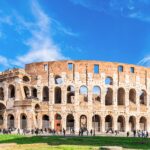
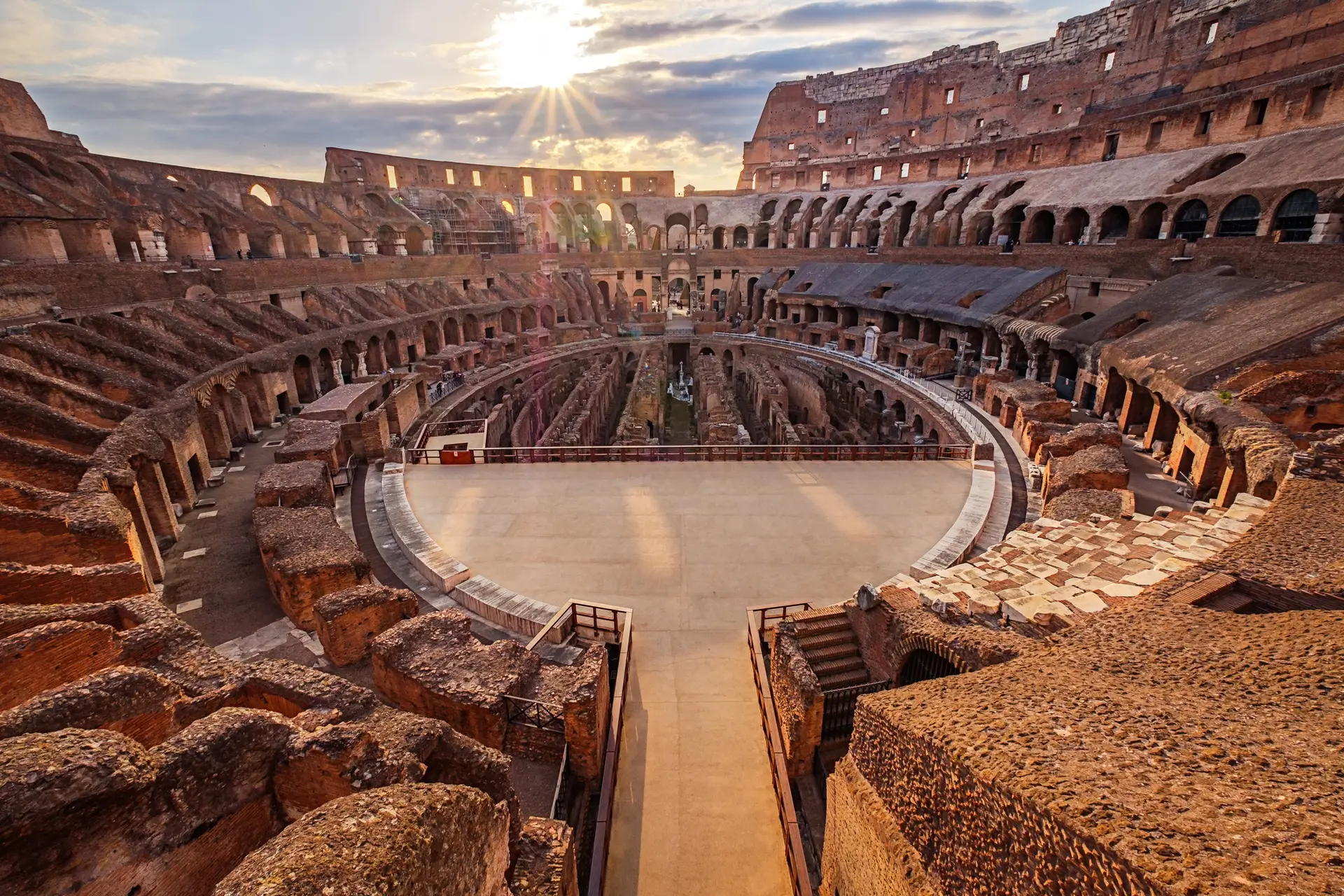
Inside the Coliseo the geometry resolves at once. From interior balconies you can see how the oval plan delivers sightlines, how tiers climb in social order, and how repeating arches carry weight and guide crowds. Your guide points to details that are easy to miss without direction, for example the alignment of axial gates, the rhythm of the vaults, and the traces that show how the monument lived beyond its first centuries. The result is practical knowledge, not trivia. You learn why the ellipse solved visibility, how staircases and corridors moved tens of thousands of people, and where to stand for balanced photographs that include the curve of seating without distortion.
Leaving the amphitheater, the route shifts to the Foro Romano, a landscape that can feel like scattered stones until a plan is drawn. The commentary explains why a basilica was a civic hall, how the Vía Sacra organized processions, and where arches and temple podia created lines that still shape the ground. With each stop a link clicks into place. A portico that looks like an isolated façade becomes a marker for commerce, an arch becomes a hinge in the city plan, and an inscription fixes a building to a date and a purpose. You will find the scale human and the pace steady, which leaves time to step close to carved reliefs, then step back for context.
Forum to Palatine, a single story in three chapters
The climb toward the Colina Palatina is short and the reward is immediate. From terraces over the valley the plan becomes a single composition, with palace remains close by and the amphitheater sitting across the far edge. The guide uses this vantage to tie threads together, power above ceremony, private architecture above public space, processional routes turning into modern streets, a pattern that repeats as you move through the city later in the day. This is where the mental map settles, the point at which you can look down and say what connected to what and why people crossed this ground in the ways they did.
The format keeps logistics simple. Entry is reserved, security is routine, and transitions between the three areas are short. Commentary is clear and audible, and the route avoids long stints in direct sun when possible. If crowds gather, the guide adjusts angles rather than rushing, so you can still hear and see the key lines that turn fragments into structure. Because the sequence is defined, there is no need to juggle separate tickets once you begin, and you do not lose time searching for the next entrance inside the park.
Comfort makes attention easier, and attention is what turns a famous sight into a lasting memory. Supportive shoes help on mixed stone and earth surfaces. A light layer is useful for breezes on the hill. Water keeps you present on bright days when marble reflects light. Photography is welcome and easier when you vary distance, wide frames in the amphitheater and from the hill, mid range in the Forum to hold inscriptions and reliefs. The guide will point out clean sightlines where the curve reads well and where arches align without crowding.
Expectations stay clear. This is a guided visit through the classic circuit, the ColiseoEl Foro Romanoy el Colina Palatina. Specialized areas such as underground sections are not part of this product unless your chosen option at checkout states otherwise. The value is a single, coherent story told in order, architecture first, civic life next, then the overview that locks the plan. With that sequence in mind, later walks through central Roma become easier. You will notice a line of sight that echoes an ancient axis, a reused column base that anchors a corner, a slope that explains why a street bends.
Small strategies improve every minute. In the amphitheater, begin with a slow circle to let your eyes adjust to scale, then use railings for steady wide shots. In the Forum, pause at the start of the Vía Sacra and trace the route with your eye before you move, it makes each stop feel connected rather than isolated. On the hill, give yourself a full minute of stillness to watch how the space resolves, it helps you hold the map long after you leave the park. Throughout your planning, confirm your place via Tiqets.com for guided entry that links the amphitheater, the civic core, and the hill into one readable visit.
By the end you are not just collecting views. You know why crowds moved the way they did inside the Coliseo, where law and trade shared a roof in the Foro Romano, and how emperors looked out from the Colina Palatina. You leave with a map in your head that keeps unfolding as you walk the modern city, and a set of photographs that read as more than scenery because you understand the shapes in the frame.
VER MÁS
Reseñas
Clara, Francia
Un gran equilibrio entre turismo y aprendizaje. Me gustaron especialmente las explicaciones del Foro, que lo unían todo.
Jonas, Alemania
La visita estuvo bien organizada y fue informativa. El acceso al estadio fue muy especial en comparación con una visita normal.
Sofía, España
Nuestro guía era simpático y estaba bien informado. Ver el Palatino junto con el Coliseo completó el día.
Liam, Reino Unido
Lo mejor fue, sin duda, estar en el suelo del estadio. El reducido tamaño del grupo facilitó el seguimiento y las preguntas.
Galería

 EN
EN  ES
ES  PT
PT  FR
FR  IT
IT  DE
DE  JA
JA  ZH
ZH  KO
KO  PL
PL